
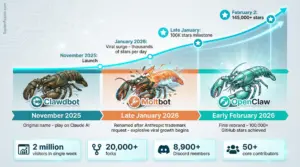
The Lobster Revolution
I’ve been tracking AI developments for years, but nothing prepared me for what happened in January 2026. Within weeks, an open-source AI agent called OpenClaw (previously Clawdbot, then Moltbot) exploded from obscurity to 100,000+ GitHub stars.

Part 6: The Software Problem
This is Part 6 of our 6-part Deep Dive series on neuromorphic computing—the brain-inspired processors achieving 1,000× efficiency improvements over GPUs at the edge. ←

Part 5: The Automotive Bet
This is Part 5 of our 6-part Deep Dive series on neuromorphic computing—the brain-inspired processors achieving 1,000× efficiency improvements over GPUs at the edge. ←
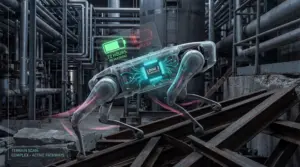
Part 4: The ANYmal Proof
This is Part 4 of our 6-part Deep Dive series on neuromorphic computing—the brain-inspired processors achieving 1,000× efficiency improvements over GPUs at the edge. ←

Part 3: IBM NorthPole
This is Part 3 of our 6-part Deep Dive series on neuromorphic computing—the brain-inspired processors achieving 1,000× efficiency improvements over GPUs at the edge. ←
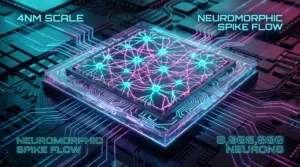
Part 2: The 1,000x Efficiency Breakthrough
This is Part 2 of our 6-part Deep Dive series on neuromorphic computing—the brain-inspired processors achieving 1,000× efficiency improvements over GPUs at the edge. ←

Part 1: The Three Walls
This is Part 1 of our 6-part Deep Dive series on neuromorphic computing—the brain-inspired processors achieving 1,000× efficiency improvements over GPUs at the edge. Index
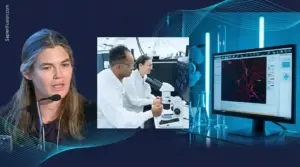
Part 3 – $800M to Rebuild Drug Discovery
Daphne Koller’s insitro reduces drug development from 10-15 years to 3-6 years through ML-first architecture—computational prediction replacing 80% of wet lab experiments, achieving 80-90% Phase I success rates.

Part 2- Building the First Longitudinal Women’s Health Dataset
Dr. Ariella Heffernan-Marks built dual infrastructure enabling 48-hour vaccine manufacturing—how Ovum’s consumer product and research platform create bidirectional value addressing the $1 trillion gender health gap.