
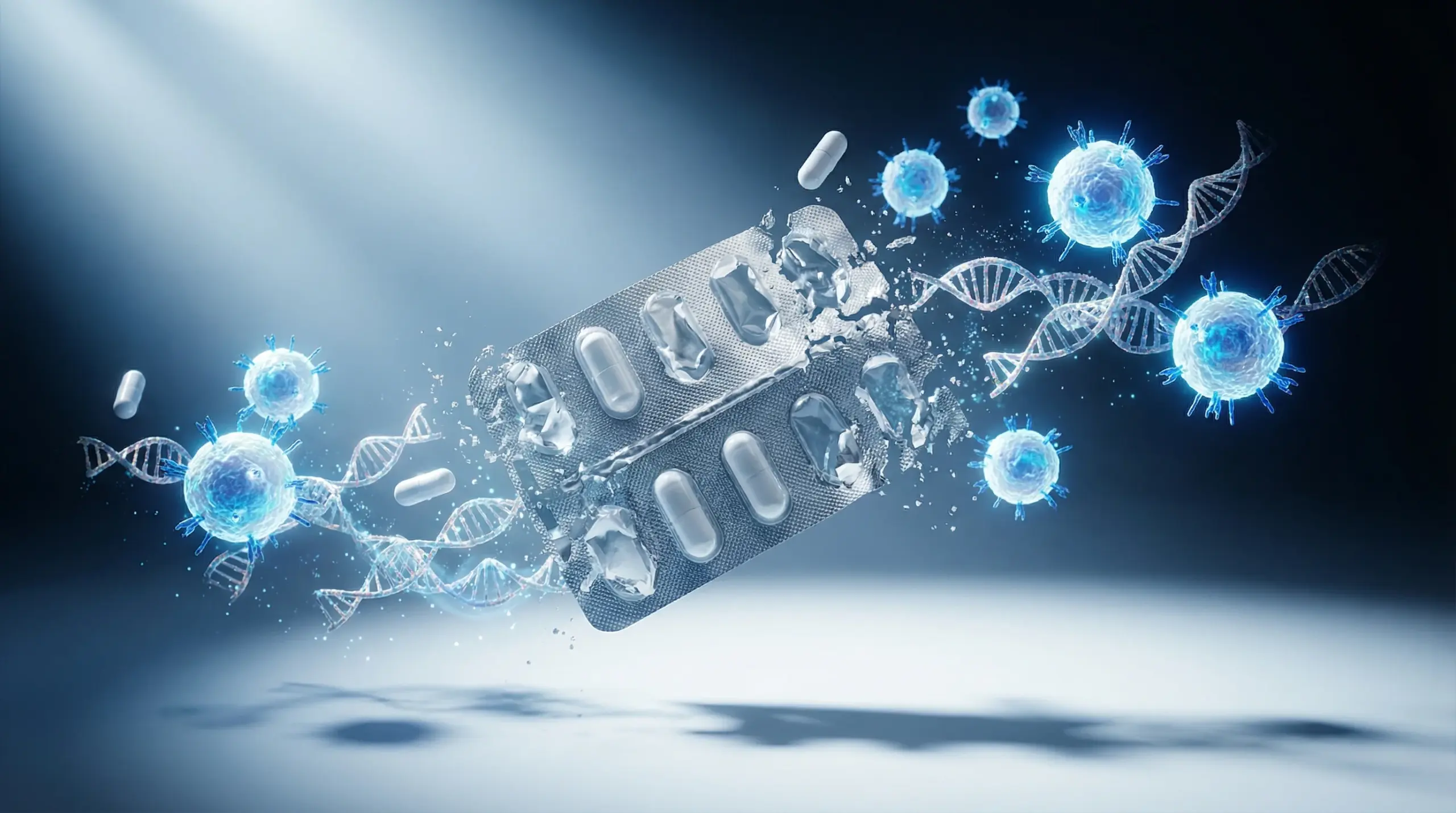
The Immune Reset Series
[🧠] Sapien Fusion Deep Dive Series | February 24, 2026
17.9 million people worldwide are living with rheumatoid arthritis. Every one of them is on a management plan, not a cure. Weekly injections. Monthly infusions. Annual dose adjustments. Drugs that cost the NHS £10,000 a year per patient. Drugs that cost Germany’s Krankenkasse up to €15,000 for first-line reference biologics — though biosimilar competition has driven some costs below €5,000. Drugs that cost Australia’s PBS enough that the government negotiates hard just to keep them listed.
The clinical assumption underlying every one of those treatment plans is about to break.
CAR-T cell therapy — the technology engineered to hunt cancer — has been quietly achieving something that rheumatologists have not seen in their lifetimes: drug-free remission in autoimmune disease.
Not management. Not reduction. Remission.
Patients with lupus, myasthenia gravis, systemic sclerosis, and rheumatoid arthritis are walking away from their biologics and not coming back.
The data is not a rumor. It is published. Nine of ten RA patients treated with CAR-T achieved drug-free remission. 84% of lupus patients hit a disease activity score of zero at six months. A myasthenia gravis trial run as a placebo-controlled study — the gold standard — hit a 66.7% response rate without the chemotherapy pre-treatment that has historically made CAR-T inaccessible outside of major cancer centers.
The immune system does not have a cure.
Until now.
The cost that nobody is calculating
Every healthcare system counts the drug cost. Almost none of them count the rest.
Rheumatoid arthritis does not just consume pharmaceutical budgets. It consumes people. 1 in 3 RA patients becomes work-disabled within 5 years of diagnosis. By 25 years, that figure reaches more than half. In the European Union alone, the total economic cost of RA — drug costs, hospitalization, disability payments, lost productivity, early retirement — is estimated at €45.3 billion annually. That is the number that includes the prescriptions. The number that excludes them is arguably larger.
A 38-year-old RA patient who goes on disability does not just stop generating income. She stops paying income tax. She starts drawing benefits. Her employer loses a trained worker. Her children grow up in a household under financial strain. The social cost radiates outward in ways that no pharmaceutical cost-effectiveness model fully captures.
That changes the equation entirely.
If CAR-T achieves durable remission — if that same 38-year-old patient returns to full-time work — the fiscal calculation inverts. The government does not just save on drug costs. It recovers a taxpayer. In Germany, an average worker returning to full employment generates approximately €20,000 annually in direct income tax and social contributions. Over 15 years to retirement age, that is €300,000 in recovered fiscal contribution — before accounting for the disability pension payments that stop, the healthcare costs that fall, and the social support that is no longer required. The one-time cost of treatment, viewed through that lens, is not an expense.
It is an investment.
Healthcare systems that grasp this first — that model CAR-T not as a treatment cost but as a workforce and fiscal intervention — will be the ones that approve it fastest, fund it most aggressively, and capture the downstream economic benefit. The systems that evaluate it purely on drug-versus-drug cost-effectiveness will be the last to act, and the last to realize the error.
Why this series exists
Decision-makers across healthcare systems, insurance and reinsurance, pharmaceutical strategy, hospital administration, and investment are operating on an outdated model. The model says autoimmune disease is chronic. It says the biologic market — worth over $100 billion globally — is structurally secure. It says CAR-T is a cancer technology.
All three assumptions are wrong.
The window to reposition ahead of that consensus shift is open now. This series delivers the intelligence before the headlines. Four parts. Four distinct angles. One verdict: the era of lifetime drugs for autoimmune disease has a hard end date, and the companies, systems, and executives who see it first will set the terms.
The series
1 – Your Immune System has a Factory Reset
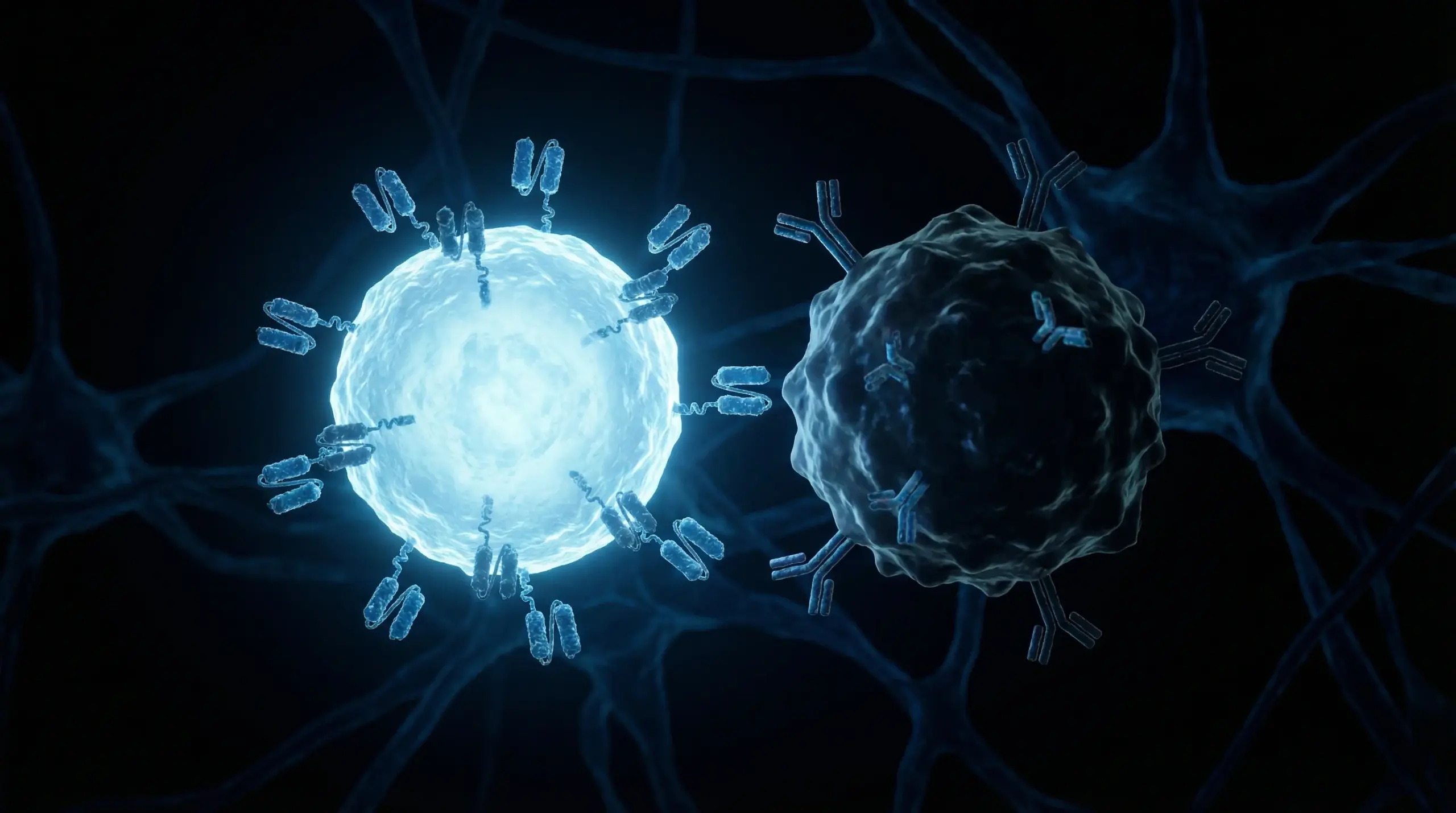
For 30 years, the treatment model for most autoimmune diseases has rested on a single, uncomfortable truth: we cannot cure them. That just changed.
2 – What is a Cure Worth?

Every health economist has run the same calculation: cost of drug A versus cost of drug B, measured in quality-adjusted life years, assessed over a 10-year horizon. That model is built for a world where nothing cures the disease. The Model is Wrong.
3 – Seven Companies are Racing to be First

The first FDA approval for a CAR-T therapy in autoimmune disease is expected in the first half of 2026. The regulatory approvals that follow will determine which companies actually reach the 17.9 million RA patients.
4 – The Cure Works
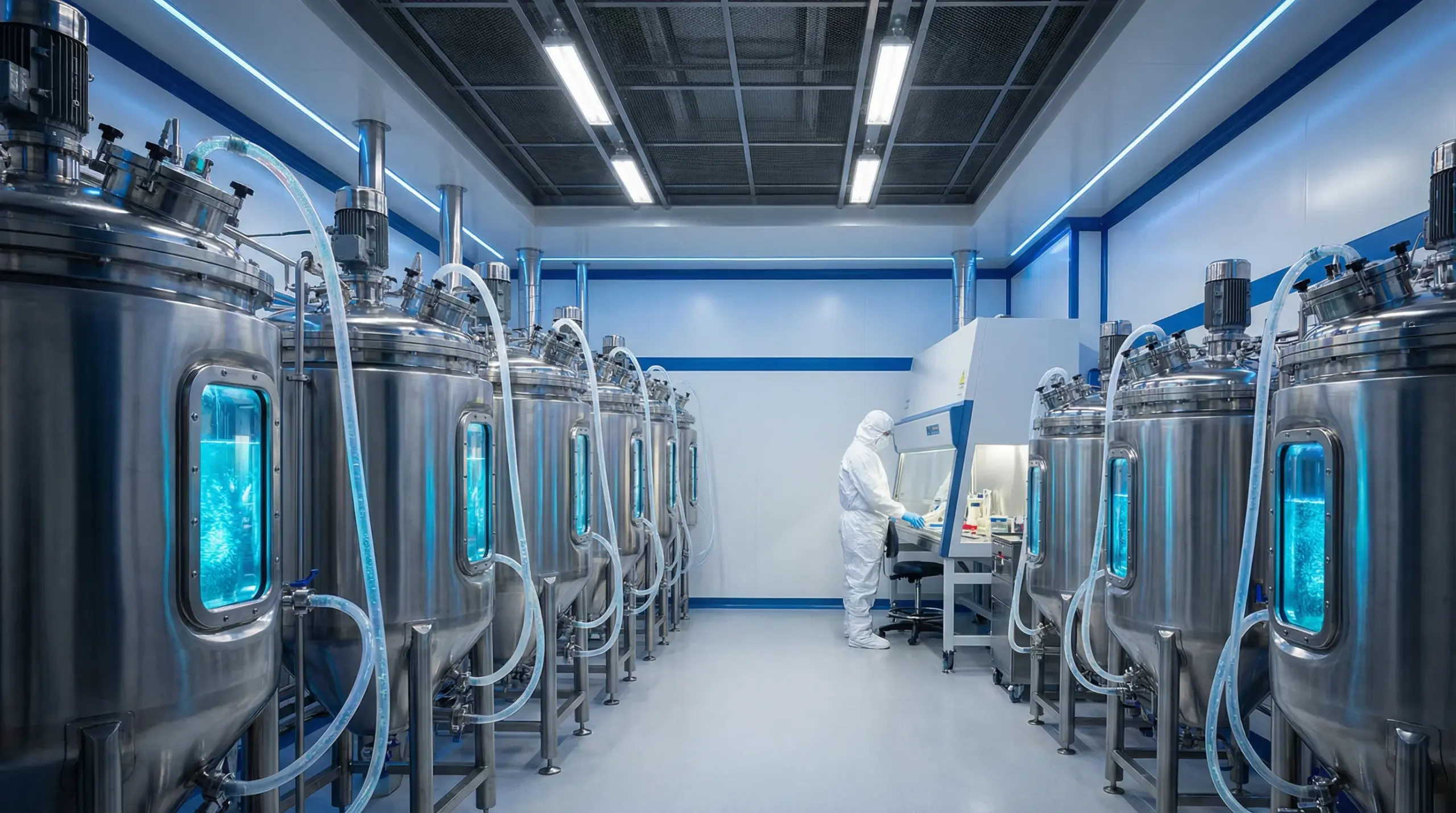
The science is ready. The clinical data is published. The regulatory path is open. The factory is the problem.
The verdict
The biologic market’s structural moat is deeper than it appears and shallower than its defenders claim. AbbVie, Amgen, Pfizer, and UCB have built extraordinary franchises on the assumption that autoimmune disease cannot be cured. That assumption is being dismantled in clinical trials right now, in patients who were told they would be on medications forever.
The first FDA approval for a CAR-T therapy in autoimmune disease is expected in the first half of 2026. The EMA pathway will follow. When NICE in the United Kingdom and the Haute Autorité de Santé in France begin their cost-effectiveness assessments, the question will not be whether CAR-T works. It will be whether the lifetime savings — drug costs, disability payments, lost tax revenue, reduced productivity — justify the upfront cost.
The answer, almost certainly, is yes.
The positioning window is not closing. It is just opening.
The intelligence to act on it is here, now, before the consensus forms.